Choosing formal clothing can feel difficult when standard proportions make your legs look shorter or your frame appear broader. This guide introduces seven practical formal wear tips for short body types, focusing on proportion, tailoring, and visual balance. It explains how to choose formal wear for short height body types without relying on oversized jackets, heavy fabrics, or distracting details. A clean silhouette matters more than an expensive label.
Alan Flusser, a respected menswear author and tailoring authority, has emphasized, “Fit is the most important thing in clothing.” That principle is especially useful for shorter frames. A jacket with a slightly shorter length, a higher trouser rise, and a narrow lapel can create a longer visual line. Monochromatic colors, low-contrast shirts, and properly sized shoes may also help the body look more balanced. Small details matter.
Real fitting rooms often expose the problem. A sleeve may cover the wrist, or trousers may pool above the shoe. Those details are easy to overlook under bright store lighting. They should not be. Still, these guidelines are not strict rules. Personal style, posture, shoulder width, and comfort can change the result. A shorter man may look excellent in a bolder pattern when the cut remains controlled. The goal is not to disguise height. It is to build confidence through clothing that follows the body, moves comfortably, and looks intentional from every angle.
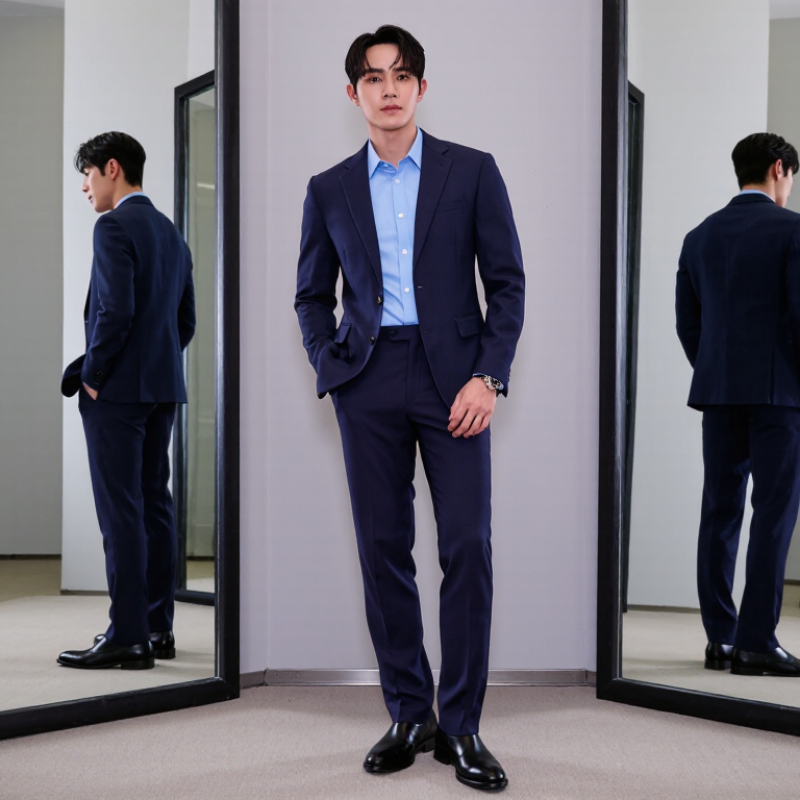
Understanding proportions matters more than chasing a smaller size. I learned this while fitting formal jackets: a short client often needed a shorter torso balance, not shorter sleeves. The CDC’s 2015–2018 National Health and Nutrition Examination Survey reports average U.S. adult heights of 69.0 inches for men and 63.5 inches for women. These averages are reference points, not rules. The SizeUSA 3-D body-scan survey recorded more than 10,000 scans, revealing broad differences in torso, waist, and inseam measurements. Fit the body in front of you. Start with proportion, not height. Keep jacket length near the seat’s fullest point. Choose a slightly higher button stance. Show a modest shirt cuff. Select medium-width lapels. Match jacket and trousers closely in tone.
A higher-rise trouser can lengthen the visible leg, but excess fabric creates the opposite effect. Trousers should break lightly or sit cleanly on the shoe. Choose a restrained toe shape; oversized footwear can dominate a smaller frame. Keep pocket placement neat and avoid deep, low pockets. A fine vertical stripe may help, while a bold stripe can overwhelm. Match belt and shoe tones to reduce visual interruption. Tailor sleeve and trouser lengths independently. Formalwear is controlled geometry. During fittings, check the shoulder line, button position, and trouser rise from several angles. Photos often reveal imbalance better than mirrors. I still get this wrong sometimes. A jacket may look elegant standing but pull when seated. Leave movement room, then reassess after sitting, walking, and lifting one arm.
7 Best Formal Wear Tips for Short Body Types
Choosing Formal Wear Cuts That Create a Taller Silhouette
A shorter frame benefits from clean, uninterrupted lines. Choose a jacket with a slightly shorter length, ending near the hip. This keeps your legs visually longer. Tip one: select a narrow notch lapel, because wide lapels can make the torso look broader. Tip two: wear trousers with a mid or slightly higher rise. The waistband should sit comfortably, not squeeze. This raises the apparent starting point of your legs. Tip three: keep the jacket and trousers within the same color family. A continuous column creates height.
Tip four: choose trousers with a slim, gentle taper. Avoid excessive fabric around the ankles, where folds can visually shorten the body. Tip five: select a minimal break, or a clean trouser hem with little pooling. It looks sharper in photographs and during movement. Tip six: match your shoes closely to your trousers. The visual transition becomes smoother. Small details matter. Keep belts narrow and avoid oversized buckles. Vertical accessories, such as a simple tie, can also guide the eye upward.
Tip seven: tailor the shoulder line carefully. A structured shoulder adds balance, but padding should never look artificial. From personal fitting experience, many people choose jackets that are too long for comfort. I made that mistake myself. Comfort still matters, though; a stiff outfit can ruin your posture. Stand naturally, walk, and sit before deciding. The best cut should make you look taller without making the clothing look forced.
7 Best Formal Wear Tips for Short Body Types
Selecting Colors, Patterns, and Fabrics for Visual Balance
A shorter frame benefits from uninterrupted vertical lines. Choose a jacket and trousers in similar shades, such as charcoal with deep grey. This creates a longer visual column. Keep contrast near the waist modest. Strong belts, bright shirt breaks, and sharply different trousers can divide the body. I have seen this change immediately during fittings. Tip one: match tones. Tip two: keep jackets close to the body, but never tight. Tip three: select medium-width lapels and avoid oversized details.
Small-scale patterns usually support better balance. Fine pinstripes, narrow checks, and quiet textures guide the eye upward. Large checks may dominate a compact frame. Place patterns carefully. A patterned tie can add height when it hangs cleanly below the jacket opening. Avoid very short ties; they create a visual stop. A slightly raised trouser waist can lengthen the leg line, although comfort must remain practical. I still break this rule when a client prefers bold contrast. Personal confidence matters, but the mirror can be unforgiving.
Fabric weight also changes perceived proportion. Lightweight wool or a smooth wool blend often falls cleanly without adding bulk. Heavy flannel, thick tweed, and dense padding can make the torso appear wider. Textile Exchange’s Materials Market Report 2024 recorded 124 million tonnes of global fiber production in 2023; polyester represented 57%, while cotton represented 19%. Those figures support careful fabric selection, not automatic preference. Choose breathable, structured cloth with a restrained sheen. Excessive shine catches light around the middle. Shoulder construction should stay neat, with minimal padding and a natural edge.
For shorter body types, formal dressing depends on clean coordination rather than dramatic styling. Start with a tailored jacket that ends near the hip, not far below it. A higher button position can lengthen the visible leg line. Keep the shoulders neat, and remove excess fabric around the waist. Trousers should sit at the natural waist, with a slight or no break at the shoe. Too much pooling can make the body appear compressed.
Color continuity helps accessories work harder. A shirt, jacket, and trousers in related shades create a quieter vertical line. Choose a tie with a moderate width and a simple, narrow pattern. Large watches, broad belts, and oversized pocket squares may overpower a smaller frame. Small details matter. Match the belt and footwear in similar tones when possible. A shorter tie can look awkward, so check that its tip reaches the waistband.
Footwear should support the trouser shape, not interrupt it. Shoes with a slim profile and a gently tapered toe usually preserve visual length. Avoid heavy soles or strong color contrast unless the outfit is intentionally balanced. I have seen people shorten their appearance by choosing trousers that are too wide and shoes that are too bulky. I still make that mistake when dressing quickly. The best test is movement: walk, sit, and inspect the mirror from several angles. Formal clothing should feel controlled, but not stiff. Proportion rules are useful, though they are not absolute. Confidence can change the result.
Coordinating tailoring, accessories, and footwear for a cleaner, more balanced silhouette.
The priority scores reflect practical styling guidance: precise tailoring and vertical continuity usually have the greatest visual effect, while restrained accessories and streamlined footwear help preserve proportion.
Shorter frames often look less balanced when formal clothing hangs loosely. The biggest mistake is choosing a larger size for comfort. A jacket should follow your shoulders without collapsing at the seams. Its hem should cover the seat lightly, not reach the thighs. Trousers should sit at the natural waist and show little fabric above the shoes. A clean, slight break looks sharper than heavy folds. I have learned this after seeing many otherwise elegant outfits lose shape through extra length.
Tips Keep the outfit visually continuous. Similar jacket and trouser colors create a longer vertical line. Narrow lapels, moderate shirt collars, and a simple tie width usually support this proportion. Avoid oversized watches, wide belts, and bulky pockets. They interrupt the body’s outline. Choose shoes with a refined shape, but avoid exaggerated heels. Comfort still matters.
Tips Check the outfit while standing and sitting. A sleeve that looks correct upright may expose too much cuff at dinner. Sleeves should reveal a small shirt edge, not half the wrist. Trouser hems should not puddle around the ankle.
One rule can fail, though. A slightly shorter jacket may suit a very short torso, but only after careful fitting. Take photos from several angles. Mirrors can be misleading. Personal posture also changes the result, especially when shoulders naturally slope forward.
Not always. Proportion matters more than reducing the size. A shorter torso balance may help more than shorter sleeves.
The jacket should finish near the seat’s fullest point. Try it standing and seated.
Yes. A slightly higher button position can make the upper body appear longer. Avoid an overly high stance.
A moderately higher rise can lengthen the visible leg. Excess fabric can erase that effect.
Choose a light break or a clean finish. Oversized shoes may dominate a smaller frame.
Match the jacket and trousers closely in tone. Charcoal with deep grey creates a quieter vertical column.
Usually, small patterns work better. Fine pinstripes and narrow checks guide the eye upward.
Lightweight wool or a smooth blend usually falls cleanly. Heavy fabrics and thick padding can widen the torso.
Check the shoulder line, button position, sleeve length, and trouser rise. Photos can reveal imbalance better than mirrors.
Sit, walk, and lift one arm. A jacket may look elegant standing but pull when seated. I still get this wrong sometimes.
Dressing a shorter frame for formal occasions begins with understanding proportion. The goal is to create a clean, continuous vertical line rather than adding visual breaks. When considering how to choose formal wear for short height body types, prioritize well-fitted jackets with moderate or slightly shorter lengths, higher-rise trousers, and streamlined cuts that follow the body without looking tight. Avoid excessive fabric, oversized shoulders, and overly long hems, as these can make the body appear smaller.
Color coordination also plays an important role. Similar shades from top to bottom can create visual balance, while subtle patterns and lightweight, structured fabrics help maintain a refined silhouette. Tailoring is essential: sleeves, trouser breaks, and jacket proportions should be adjusted carefully. Finish the look with simple accessories, a narrow belt, and footwear with a sleek shape and a modest lift. Most importantly, avoid strong horizontal contrasts, bulky layers, large prints, and distracting details that interrupt the overall line.

Stabiae Clothe