Formal wear is never just a suit, gown, or polished pair of shoes. Its meaning depends on the event, the people attending, and the customs surrounding it. In 2026, international weddings, business gatherings, and cultural celebrations bring different dress expectations into the same room. A dark jacket may feel suitably formal in one setting, while another calls for brighter colors, traditional garments, or more covered shoulders.
So, why does formal wear vary across cultures? History, climate, religion, social etiquette, and ideas about respect all shape what people choose to wear. These influences are not fixed rules, and no culture speaks with one voice. A garment welcomed at one celebration may be unsuitable at another. Details matter: the invitation’s wording, the venue, the season, and whether the hosts have shared specific guidance. Ask when unsure.
This guide offers a practical way to make thoughtful choices without treating cultural dress as a costume. It considers fit, fabric, color, modesty, and the difference between traditional attire and contemporary formalwear. A breathable wool blend may suit a warm indoor reception; a high neckline or longer hem may feel more appropriate for a particular ceremony. Check with the host, consult a knowledgeable local tailor, or follow reliable guidance from cultural institutions when the expectations are unfamiliar. Even careful research can miss a detail. That deserves reflection, not guesswork. The aim is simple: dress with care, remain open to correction, and let respect guide the final choice.
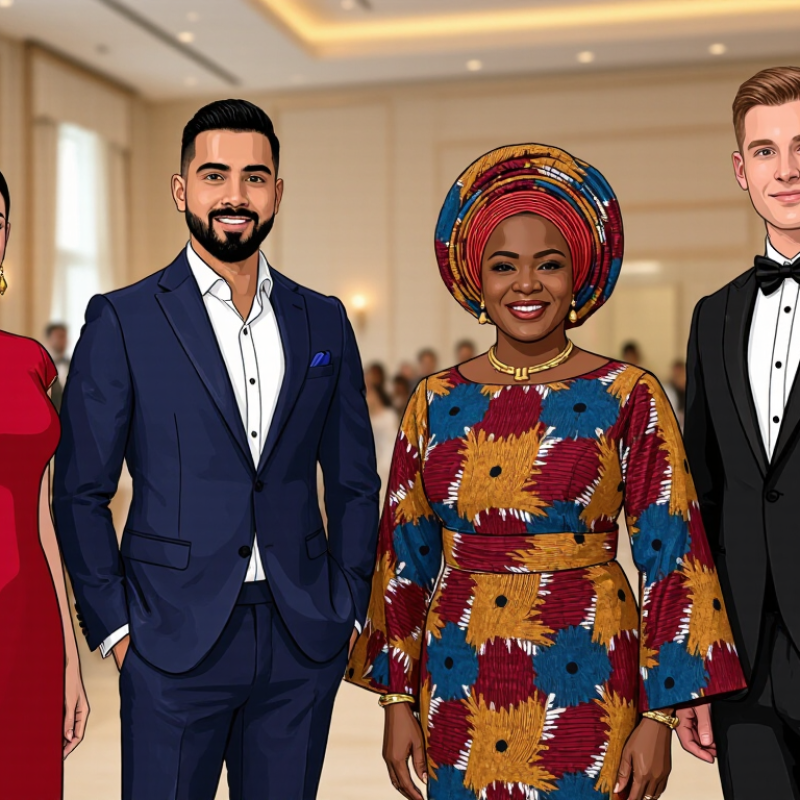
Formal wear is not a universal dress code. A dark suit may feel appropriate at one event, while another calls for traditional clothing or more covered shoulders. In 2026, invitations may name a dress code, but they rarely explain every cultural expectation. Ask the host about garment styles, colors, and coverage if details are unclear. Small details matter. A collar, head covering, or specific color can carry meaning beyond appearance. Avoid assuming that one person can speak for an entire community.
Cultural context also includes the event’s purpose, setting, and generation. A wedding ceremony, business reception, and family celebration may each have different expectations, even within the same culture. Research reliable cultural or community sources, then confirm practical questions with the organizer. Don’t treat traditional dress as a costume or borrow ceremonial pieces without understanding their significance. Even careful research can miss local nuance; style advice is not a substitute for asking respectfully. When uncertain, choose a polished, modest outfit and leave room for the host’s guidance. A small adjustment, such as bringing a jacket or choosing less conspicuous accessories, can make an outfit more considerate.
How to Choose Formal Wear Across Cultures in 2026?
Identifying the Event, Dress Code, and Local Protocol
Start with the invitation, not your wardrobe. “Formal” can mean a dark suit, an evening gown, or locally recognized traditional dress. Check the event’s purpose, time, venue, and host guidance. A daytime ceremony in a place of worship may call for covered shoulders and quieter colors; a hotel gala may expect evening attire. Details matter.
International settings are increasingly common. UN Tourism’s World Tourism Barometer, published in January 2025, estimated 1.4 billion international tourist arrivals in 2024, nearly 99% of 2019’s total. That figure is not an event-attire survey, but it underlines how often guests encounter unfamiliar customs. Ask the organizer about modesty, head coverings, footwear, and whether cultural dress is welcome. If guidance is unclear, ask privately and specifically. Avoid treating one person’s preference as a whole community’s rule.
Fit the formality, then check local protocol. Choose clothes that let you sit, greet guests, and move comfortably; test them before the event, including with the shoes you plan to wear. Do not borrow ceremonial garments or symbols without permission. Small details can carry meaning. I would not assume that a polished outfit is automatically respectful; that judgment depends on the setting, and even careful research can miss a local nuance. Ask, listen, and adjust.
Choosing formal wear across cultures in 2026 means looking beyond appearance. Traditional garments can express community, ceremony, family history, or personal identity. A Japanese kimono, Korean hanbok, and South Asian sari each have distinct histories and many regional forms. Their meanings are not fixed. Context matters.
A sari’s draping style may reflect regional practice, while a hanbok’s colors and silhouette can relate to the occasion. A kimono’s formality may depend on its type, motifs, and how it is worn. In Ghana, kente cloth is associated with identity and celebration, but its significance varies among people and settings.
These are clues, not rules. Avoid treating one garment as a symbol for everyone in a culture. Even careful research can miss local nuance; admitting that is better than pretending certainty.
Tips: Ask your host or a knowledgeable community member about dress expectations. Check whether particular colors, accessories, or ways of wearing a garment suit the event. If borrowing traditional clothing, learn how to handle and wear it respectfully. Choose comfort, too: a long ceremony can make unfamiliar fabric or footwear feel less elegant than expected.
Formal wear is more than a dress code; it can signal respect, belonging, and personal identity. Before choosing an outfit, check the invitation and ask your host about expectations. Customs vary between communities, families, and even events, so avoid treating one person’s advice as a rule for everyone. Customs are not costumes.
Look for practical details: whether shoulders should be covered, how formal the setting is, and whether certain colors carry special meaning. A jacket, a longer hem, or a light scarf can offer flexibility without changing your whole style. Choose shoes you can comfortably wear through the event, especially if it includes standing or dancing. Ask before assuming.
Respect does not require erasing yourself. You might pair a familiar silhouette with a color, fabric, or accessory that feels personal, while avoiding sacred or ceremonial items unless you are invited to wear them. If guidance is unclear, a brief, polite question is better than guessing. The balance is not always obvious; an outfit that feels modest to one guest may feel restrictive to another. Leave room to reconsider, and listen without becoming defensive if someone offers thoughtful feedback.
Formal wear across cultures starts with the invitation, not a fixed rulebook. Ask the host about the event’s dress expectations, especially when traditional clothing may be welcome. Fit matters. A jacket should let you raise your arms without pulling at the shoulders, while trousers should sit comfortably when you sit down. Try the full outfit before the event; small problems feel larger after an hour.
Choose fabric for the setting as well as appearance. Breathable cotton or linen can feel comfortable in a warm, crowded room, though both may crease during travel. Wool blends often hold their shape in cooler venues. Check the lining, seams, and care label, and test how the fabric feels against your skin. I still find temperature easy to misjudge, so a light layer can be useful.
Accessories should complement the outfit without treating cultural symbols as decoration. If you are unsure whether a particular item is appropriate, ask someone familiar with the occasion. Keep essentials practical: shoes should be broken in, and a small bag should fit your phone, invitation, and any needed medication. Test it indoors. A quick walk on stairs can reveal slipping soles or a hem that catches.
Fabric moisture regain can help inform comfort choices for formal wear across different climates and occasions.
How to read this: Moisture regain is the amount of moisture a dry fiber absorbs from the surrounding air, expressed as a percentage of its dry weight. Higher values do not automatically mean a fabric feels cooler or is better for every occasion. Garment construction, fiber blends, finishes, climate, and local dress customs also matter. Values shown are typical reference figures and may vary.
Read the invitation for the event’s purpose, time, venue, and dress guidance. A daytime ceremony may call for covered shoulders; an evening gala may expect more formal attire.
Ask the host privately about modesty, head coverings, footwear, colors, and traditional dress. One person’s preference may not represent an entire community.
Not necessarily. Ask before wearing traditional or ceremonial garments, especially when they carry cultural or sacred meaning. Customs are not costumes.
Keep a familiar silhouette and add a suitable color, fabric, or accessory. Avoid ceremonial items unless invited to wear them.
Try the complete outfit before the event. Raise your arms, sit down, and walk in your planned shoes. A jacket should not pull at the shoulders.
Breathable cotton or linen can feel comfortable in warm, crowded rooms, but may crease during travel. Wool blends often hold their shape in cooler venues.
Break in your shoes and check the soles on stairs. Make sure your hem does not catch. Test the bag with your phone and invitation inside.
Ask a specific, polite question and listen to the answer. I still misjudge room temperatures, so a light layer can help. Reconsider if someone offers thoughtful feedback.
Choosing formal wear across cultures in 2026 begins with understanding the event, its dress code, and the expectations of the local community. The question “why does formal wear vary across cultures” has many answers: clothing can express history, identity, respect, spirituality, and ideas about occasion and status. Traditional garments may carry meanings that are not immediately obvious to visitors, so learning about them helps people make thoughtful choices rather than treating cultural attire as decoration.
A suitable outfit should balance respect for local customs with personal identity and comfort. Consider whether traditional or contemporary clothing is appropriate, and pay attention to fit, fabric, accessories, weather, and the practical demands of the event. When expectations are unclear, ask a trusted host or organizer for guidance. With care and curiosity, formal wear can help people feel confident while honoring the significance clothing holds for others.

Stabiae Clothe